
When to Consider Removing a Large Tree Threatening Your Home in Mattapoisett, MA After Coastal Storms
Living on or near the water in Mattapoisett brings beautiful views—and extra risk after coastal storms. Large trees that stood firm for years can show new signs of trouble after high winds, salt spray, or saturated soil. Homeowners need clear, practical guidance to decide when a tree is a hazard and when professional tree removal is the safest option.
After a storm, quick but careful assessment matters. Trees near roofs, decks, driveways, or utility lines can become immediate threats to safety and property. This article walks Mattapoisett homeowners through how to evaluate storm damage, what to do right away, and when to hire a licensed crew to remove a hazardous tree with minimal impact to your property.
Norman Tree Service provides local expertise for homeowners across Southeastern Massachusetts. If you want to start with a general overview of our company and approach to safety and service, visit Norman Tree Service.
How coastal storms increase risks for large trees near Mattapoisett homes
Coastal storms combine high winds, heavy rain, and salt spray—each factor affecting trees differently. Strong winds can break branches or uproot trees outright, while saturated soil reduces root anchorage. Salt spray can stress foliage and weaken a tree’s health over weeks and months. For waterfront properties in Mattapoisett, these combined stresses can turn a formerly healthy tree into a hazard.
Wind direction is also important. Trees facing the ocean or exposed shorelines take the brunt of storms and are more likely to develop structural weaknesses on the windward side. Even trees inland but within a property’s wind tunnel—between rows of buildings or along exposed driveways—can suffer hidden damage.
Because storm impacts vary, a post-storm inspection should be both visual and practical. Look for obvious failures like split trunks or snapped limbs, but also for subtler clues such as fresh root heave, leaning that wasn’t present before, or an increase in dead branches. If you’re unsure after a quick check, consider contacting professionals who offer storm damage assessments and emergency assistance.
Signs to assess storm damage and structural instability
After a coastal storm, inspect trees from a safe distance for these common warning signs: new lean, large cracks in the trunk, loose or detached bark, large dead limbs, or root plate movement. On waterfront and near-coast properties, pay special attention to trees that lean toward the house or structures—these pose a higher risk if they fail later.
Another key indicator is root damage. If the soil around the base looks lifted or roots are exposed, the tree may have lost the anchorage necessary to stand. Also note any cavities or areas of decay at the trunk base; rot can make a tree structurally unsound even if it still has a full canopy.
Take photos and make notes about what you see. This documentation helps professionals provide a faster, more accurate assessment. If you spot anything that suggests immediate danger—large hanging limbs or a tree leaning toward occupied spaces—treat the situation as urgent and avoid the area.
Immediate safety actions after a coastal storm
Safety comes first. If a tree has fallen on a structure or brought down utility lines, call emergency services and your utility provider before attempting any work. Trees touching power lines require specialized crews and should never be handled by untrained homeowners.
For trees that are intact but damaged, establish a safety zone under and around the tree. Keep children, pets, and vehicles away until a professional can evaluate the risk. Temporary measures like removing patio furniture or covering vehicles can reduce collateral damage if a limb falls later.
If the damage presents a non-immediate but concerning risk, reach out to a local team that provides emergency tree services and storm damage support. They can stabilize or remove hazardous branches and advise whether full tree removal is necessary to protect your home.
When tree removal is the safest option for waterfront properties
Deciding on removal depends on safety, tree health, and placement. Removal is often the right choice when a tree shows significant structural failure (split trunk, large decay zones), when root systems are compromised, or when a tree leans dangerously toward a house, deck, or utility lines. Waterfront trees that have had their root systems undermined by erosion or saturated soil after a storm are higher risk.
Removal also becomes necessary when a damaged tree is beyond practical repair. For example, if more than half the crown is dead or if the cost and limits of corrective pruning would leave the tree hazardous or unsightly, removal is a sensible long-term solution. For homeowners who prioritize property safety and future liability reduction, early, careful removal can prevent more costly damage later.
When removal is on the table, consult experienced professionals who can give a professional tree removal assessment. They’ll weigh the tree’s condition, proximity to structures, and the safest removal strategy—often using rigging and section cutting to limit impact on roofs, gardens, and hardscapes.
What to expect during a professional tree removal in Mattapoisett
Licensed crews begin with a site assessment and a removal plan that considers safety, property impact, and logistics. On waterfront properties, crews also evaluate access, slope, and any erosion concerns that affect equipment placement. Expect a pre-work discussion about the plan, timeline, and safety measures that will be used.
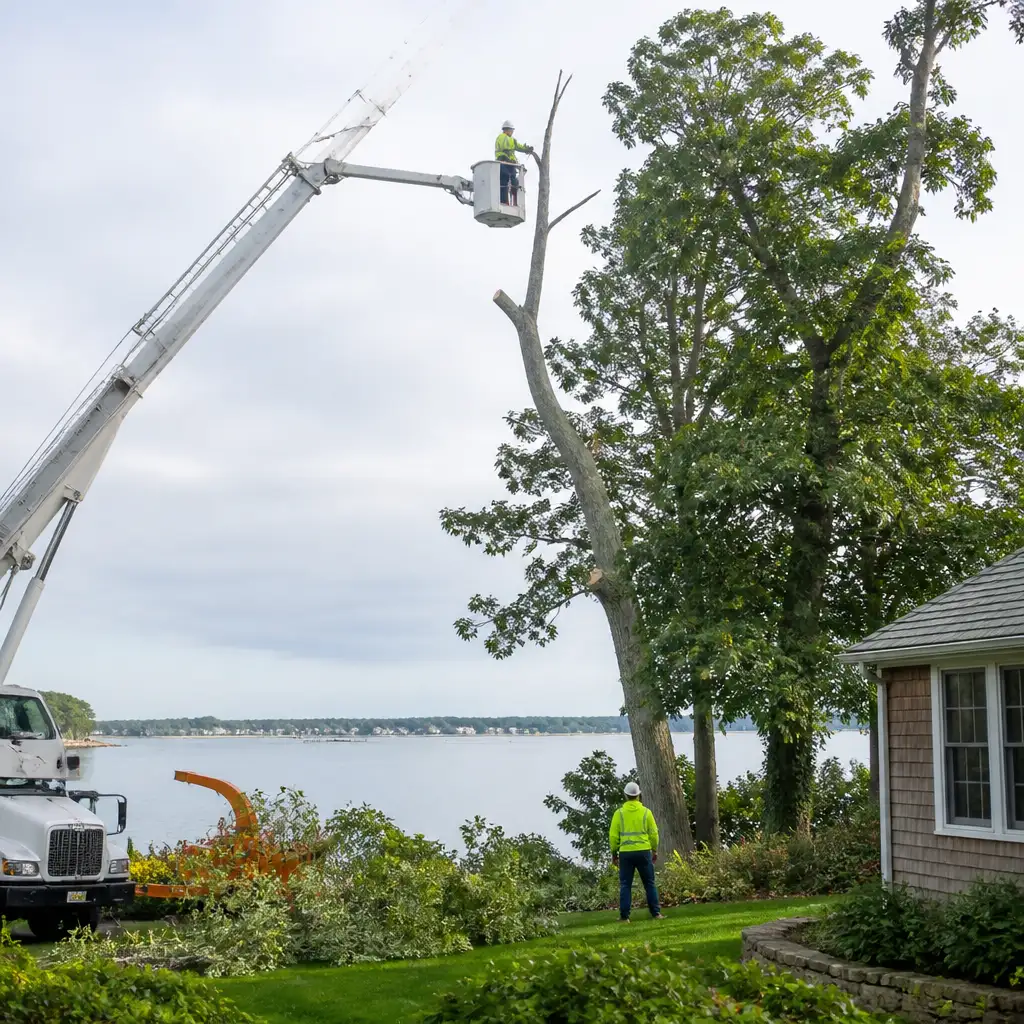
During removal, crews use modern equipment and rigging to take down the tree in controlled sections—minimizing risk to homes and landscape. Good tree companies will protect nearby structures, place mats or plywood to avoid lawn damage from heavy equipment, and communicate steps as the job progresses. If storm conditions made access difficult, crews can adapt techniques to keep the work safe and efficient.
After the tree is removed, teams typically clean the work area and may offer wood disposal or chipping options. If you want a quote or to request an estimate, a site visit helps provide an accurate plan and cost estimate tailored to your Mattapoisett property.
Licensed, insured, and low-impact removal: why it matters
Choosing a fully licensed and insured team protects you and your property. Licensing shows a company adheres to professional standards; insurance provides financial protection if something unexpected happens during removal. For waterfront homeowners, where jobs often require specialized rigging or crane work, licensing and insurance are essential.
Low-impact removal is also a priority. Experienced crews use techniques and equipment that reduce harm to lawns, gardens, and hardscapes. They plan routes for machinery to avoid erosion-prone areas and often use smaller footprint equipment for tight residential sites common in Mattapoisett neighborhoods.
Ask any contractor about their safety procedures, proof of insurance, and examples of similar jobs in Southeastern Massachusetts. Local experience matters—companies familiar with coastal conditions and homeowner concerns can anticipate challenges and protect your property better than an out-of-area crew.
Preventing future storm damage with seasonal care
Preventative tree maintenance reduces the chance that a storm will create a hazardous situation. Regular structural pruning, removal of deadwood, and annual inspections help trees shed wind more effectively and reduce the likelihood of large limb failures. For Mattapoisett homeowners, schedule seasonal checks—especially after winter and before hurricane season.
Tree trimming and pruning performed by professionals improve tree health and lower future risks. A well-timed pruning program can correct structural weaknesses while the tree is still young, saving the need for risky removals later. Discuss a maintenance plan with local experts to match tree species, location, and your property goals.
Routine monitoring is especially important for waterfront trees exposed to salt and wind. If you notice gradual decline in foliage, increased dead branches, or new leaning, contact experienced local crews for an evaluation. Ongoing care is one of the best ways to protect your home, preserve healthy trees, and reduce emergency removals after storms.
Frequently Asked Questions
Q: How soon should I get a damaged tree inspected after a coastal storm?
A: Inspect visually right away from a safe distance. For any signs of major structural damage, hanging limbs, or a tree leaning toward your house, schedule a professional inspection as soon as possible—ideally within 24–72 hours after the storm.
Q: Can I remove a hazardous tree myself to save money?
A: Removing large or damaged trees is dangerous and may expose you to liability, especially near homes, utilities, and on erosion-prone waterfront lots. Hiring a licensed and insured crew ensures safety, proper equipment, and protection for your property.
Q: What should I ask a tree removal company during an estimate?
A: Ask about licensing and insurance, their approach to minimizing property impact, estimated timeline, cleanup procedures, and whether they have experience with storm-damaged trees on waterfront properties. Local experience in Southeastern Massachusetts is a plus.
Whether you’re dealing with a dead tree, a hazardous tree, or a tree growing too close to your home, Norman Tree Service has the experience and equipment to complete the job safely and efficiently. Contact us today for a professional assessment and estimate.