
A Homeowner’s Guide to Structural Pruning for Young Maples in Acushnet, MA to Improve Storm Resistance
Young maple trees are a familiar sight in Acushnet yards—fast-growing, shade-giving, and attractive—but without proper early shaping they can become vulnerable to summer and fall storms. For homeowners, understanding basic structural pruning helps reduce broken limbs, limits future hazardous tree removal, and supports long-term tree health. This guide focuses on practical steps you can take for young maples to develop strong branch structure and weather Southeastern Massachusetts storms more safely.
Spring and early summer are especially relevant times in Acushnet: spring is when trees are actively growing and respond well to corrective pruning, while summer storms test newly formed branch unions. Preparing trees during these seasons can prevent costly damage later in the year and reduce the need for emergency tree services after storms.
Whether you plan to do light maintenance yourself or schedule professional help, the right timing, safe practices, and a consistent pruning schedule will make a big difference. If you’re unsure about a particular cut or tree condition, consult with local professionals who provide licensed and insured services. For homeowners wanting professional support, consider exploring our tree trimming services for safe, experienced assistance.
Why structural pruning matters for young maples in Acushnet
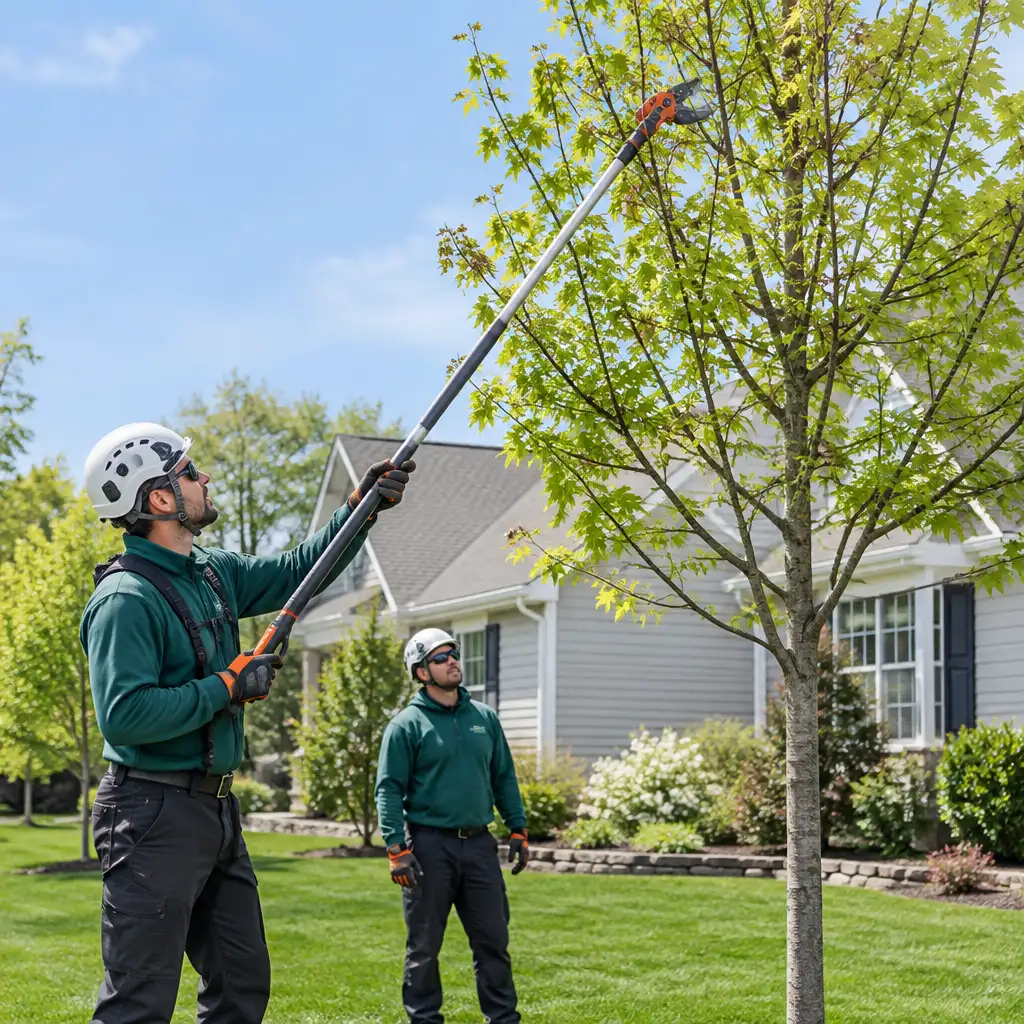
Maple species common to the Acushnet area—such as red maple and silver maple—can develop weak branch attachments if not trained early. Multiple co-dominant stems, narrow branch angles, and crossing limbs lead to stress points that are likely to fail in wind or heavy rain. Structural pruning focuses on creating a single, well-spaced scaffold system that can carry loads during storms.
Early pruning reduces the need for more aggressive cuts later in life. Instead of removing large branches from mature trees—an activity that sometimes leads to decay and calls for professional tree removal services—small corrective cuts during the tree’s early years guide how the trunk and main branches develop.
From a property protection standpoint, well-structured young maples reduce the risk to roofs, power lines, and vehicles during summer thunderstorms or fall wind events. Integrating structural pruning into your regular tree maintenance program also supports overall tree health and lowers the chance you’ll need urgent emergency tree services after a storm.
When to prune: timing by season and tree age
Timing matters for both wound closure and minimizing stress on the tree. For young maples in Acushnet, late winter to early spring—just before buds swell—is generally the best time for structural pruning. Pruning during dormancy limits sap loss and lets the tree direct energy into new, well-spaced growth as the season begins.
Avoid heavy pruning during late summer and early fall when new growth hardening is needed for winter preparedness. However, light corrective pruning and the removal of clearly weak or rubbing branches can be done in summer if necessary. If a storm damages a tree, immediate hazard-reduction cuts may be required regardless of season; in such cases, contact professionals who offer prompt storm response.
Age-based guidance: in the first 1–3 years after planting, focus on selecting a strong leader and removing competing stems. From years 3–10, periodic structural pruning shapes scaffold limbs and removes defects. After about 10 years, maintenance shifts more toward selective thinning to maintain structure and reduce wind resistance.
Step-by-step structural pruning for young maples
Step 1: Assess the tree from a distance, noting the main leader, competing stems, and any branches with narrow angles or rubbing bark. Walk around the tree to view all sides before making a cut. Mark branches to remove with biodegradable tape if that helps keep the plan clear.
Step 2: Establish a single central leader. Remove or shorten competing co-dominant stems that are within the lower 1/3 of the tree’s height or that form narrow crotches with the leader. When removing competing stems, make small, incremental cuts over several seasons if they are large—this minimizes the wound size and the risk of decay.
Step 3: Select 3–5 scaffold branches spaced evenly around the trunk and vertically up the stem. These become the permanent structure. Remove lower branches that will interfere with walkways, drives, or structures, preserving a healthy taper between trunk and limbs. Finally, thin crossing branches and remove vigorous watersprouts that divert energy from structural limbs.
Common pruning cuts and techniques homeowners should know
Understand three basic cuts: the thinning cut (removes a branch at its origin), the reduction cut (shortens a branch to a lateral), and the heading cut (removes the end of a branch). For structural pruning, prioritize thinning and reduction cuts to maintain branch health and avoid vigorous re-sprouting that occurs after heavy heading cuts.
Make pruning cuts just outside the branch collar without leaving a stub. Leaving a stub slows wound closure and can invite decay. Use proper tools: bypass pruning shears for small stems, loppers for medium branches, and a pruning saw for anything larger. Keep blades sharp to leave clean cuts that heal faster.
Avoid over-pruning: never remove more than 15–25% of live canopy in a single year on a young tree. Excessive canopy loss stresses the tree and can reduce its ability to grow strong wood. When in doubt, take a conservative approach or consult an experienced arborist.
Safety, tools, and when to call a professional
Homeowners can perform light pruning safely with the right equipment: gloves, eye protection, a hard hat when working under branches, and stable ladders. Pole pruners help reach small branches safely from the ground. Never attempt cuts near power lines—always call a professional licensed crew for anything within the utility zone.
Call a professional if branches are large (over 2–3 inches in diameter), the work requires climbing, or if the tree shows signs of disease or structural instability. Professionals bring training, rigging experience, and equipment that reduce risk to your property and people. Choosing a fully licensed and insured provider gives you accountability and peace of mind.
Norman Tree Service operates with modern equipment, trained crews, and strict safety procedures suitable for residential spaces in Southeastern Massachusetts. If you need assistance, our homepage outlines the scope of our professional care and service areas across the region.
Long-term schedule: pruning plan for the first 10 years
Year 0–1 (planting and first season): Remove broken or dead branches, select the strongest central leader, and remove one or two low branches that interfere with access or structures. Keep cuts small and conservative.
Years 2–5: Annually assess for co-dominant stems and narrow crotches. Perform light structural cuts each spring, focusing on selecting scaffold branches and reducing competition. This period is critical for training branch angles and spacing to resist wind and ice loads later on.
Years 6–10: Every 2–3 years perform maintenance pruning to remove rubbing branches, thin the crown, and correct any developing defects. As limbs become larger, avoid large removals that create big wounds; instead, spread corrective pruning over multiple seasons. Maintaining a predictable pruning schedule as part of tree maintenance protects investment and reduces the likelihood of hazardous tree removal later in life.
Frequently Asked Questions
Q: When is the best time of year to structurally prune young maples in Acushnet?
A: Late winter to early spring is usually best, before buds swell. This timing reduces sap loss and helps wounds heal as the tree breaks dormancy. Light corrective pruning can be done in summer if needed, but avoid heavy late-season pruning.
Q: How much crown can I remove from a young maple without harming it?
A: For young trees, keep pruning conservative—generally no more than 15–25% of live crown in a year. Smaller, more frequent cuts over several seasons are safer than removing a large portion of the canopy at once.
Q: What signs indicate I should call a professional rather than prune the tree myself?
A: Call a professional if branches are large (over 2–3 inches), the work requires climbing or rigging, the tree is leaning or shows decay, or branches are near power lines. Professionals can perform safe, efficient work and offer licensed and insured service options.
Proper tree pruning helps encourage healthy growth while reducing future risks. Norman Tree Service can help determine the best pruning strategy for your trees and property. Contact us today for professional guidance.