
When to Consider Removing a Storm-Damaged Tree Near Your Home in Tiverton, RI Before Winter
Introduction
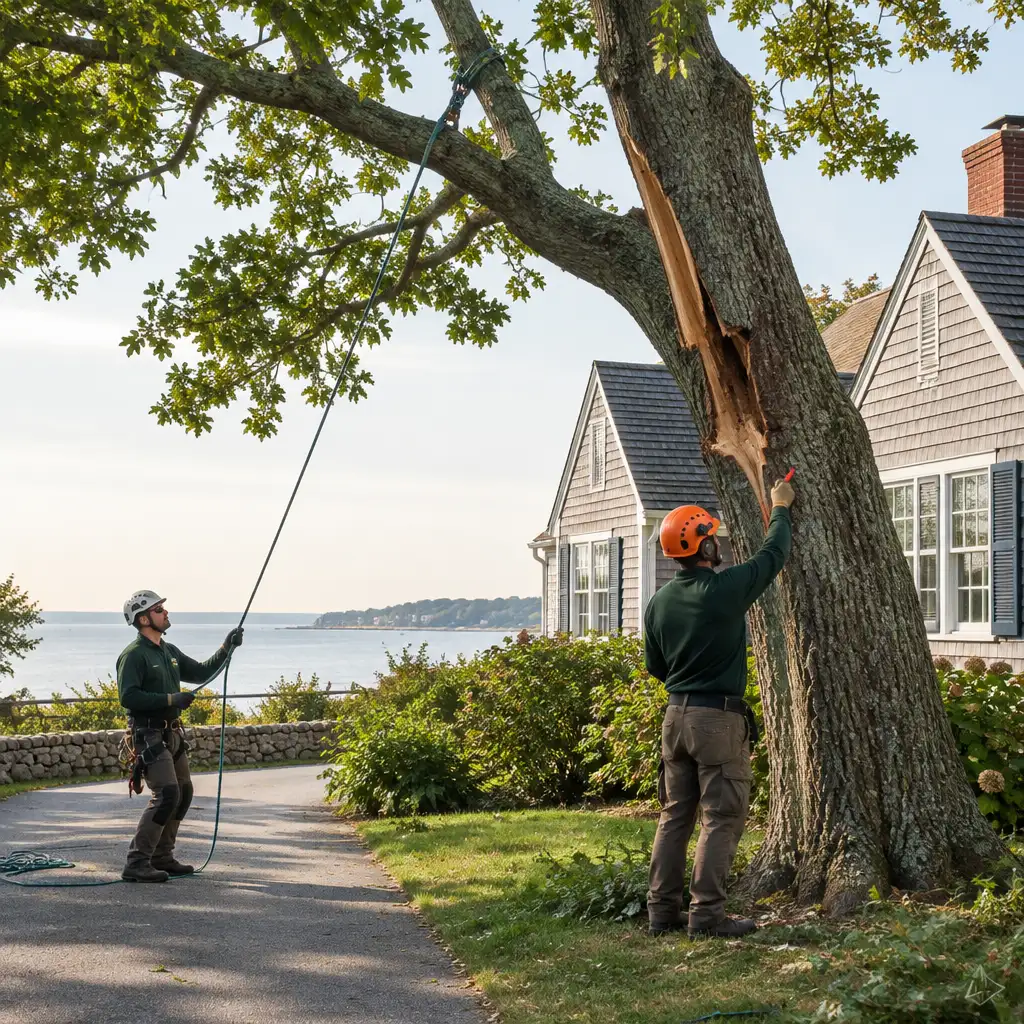
Storms along the coast of Rhode Island can leave a lot of damage in their wake. If you own a home in Tiverton, RI, or elsewhere in Southeastern Massachusetts, identifying whether a tree near your house needs removal before the colder months matters for safety and for protecting your property.
Leaves falling, branches snapping, and saturated soil are common after strong winds or heavy rain. As winter approaches with the chance of snow and ice, a structurally compromised tree that survived a recent storm may fail under added weight—creating risk to roofs, vehicles, power lines, and people.
This guide helps Tiverton homeowners evaluate storm-damaged trees, understand the signs of hazardous trees, decide when to call a licensed and insured crew, and know what to expect during a professional tree removal so you can act before winter weather increases the danger.
How to spot storm damage and safety warning signs
After a storm, walk your property at a safe distance and look for obvious and subtle signs of damage. Visible threats include large hanging limbs (sometimes called hangers), split crotches where branches meet the trunk, major canopy loss, and leaning trunks. These conditions can worsen when ice or snow accumulates.
Less obvious indicators are just as important. Look for fresh root plate movement (soil heaving around the base), mushrooms or fungal conks on the trunk, cavities or heavy decay, and cracks through bark or wood. A previously healthy-looking tree can hide internal rot that becomes critical under winter loading.
Prioritize anything that is leaning toward the house, driveway, or a utility line. If a branch is caught in power lines or a trunk is visibly split, treat the situation as urgent. For any sign of instability near structures, you should consider a professional evaluation rather than attempting DIY fixes.
Assessing the risk: what really makes a tree hazardous
Not every damaged tree needs removal. The goal of risk assessment is to weigh the likelihood of failure against what the tree could hit. A dying or dead tree close to your home is a higher priority than one farther away over a field. Key factors include the tree’s size, species, health history, lean angle, root integrity, and proximity to high-value targets like roofs and pools.
Seasonal factors matter: frozen ground may limit root movement, but ice and snow add weight. In Tiverton and the surrounding areas—New Bedford, Fall River, and Dartmouth—coastal storms often saturate soils, making roots less stable. If the tree’s root flair shows exposed or lifted roots, or if you notice a longitudinal crack at the base of the trunk, the structural integrity may be compromised.
Document what you see with photos from a safe distance and note the tree’s relationship to structures. This information helps a professional crew determine whether pruning, cabling, or full hazardous tree removal is the safest option.
When to call a licensed and insured crew for tree removal
Call a licensed and insured team when the risk of failure could cause injury, property damage, or service interruptions. Specific triggers include a tree leaning significantly toward your house, large splits or trunk fractures, major root failure, extensive decay, or a tree tangled in utility lines.
Never attempt to remove a large or unstable tree yourself. Professional crews bring experience, rigging techniques, and the right equipment to protect your home and landscape. Since winter increases hazards, scheduling an assessment now can prevent emergency situations later. For comprehensive service and safety standards, consider choosing a local firm—like Norman Tree Service—that emphasizes licensed crews and clear communication.
When you contact a company, ask about licensing, insurance, safety protocols, and whether they handle storm-related or emergency work. If the damage is making your property unsafe right away, you may need emergency tree services to secure the site and begin removal safely.
What to expect during professional tree removal near your home
A professional crew will start with an on-site assessment and written estimate. During the visit they check anchoring points, potential drop zones, proximity to utilities, and access for trucks or a bucket. For residential jobs, expect careful planning to protect roofs, siding, lawns, and hardscape.
On the day of work the crew establishes a safety perimeter and uses proper personal protective equipment. Equipment might include a bucket truck for elevated work, rigging gear to lower large sections safely, and a chipper for branch disposal. Teams skilled in residential removals use sectional dismantling—removing a tree piece-by-piece—to limit impact on property and reduce the chance of accidental damage.
Licensed operators follow safety procedures and often carry liability insurance; this protects you and the workers. If you’re concerned about costs or timing, ask for a clear schedule and a breakdown of what the final price includes. If you want the removed wood left on site or hauled away, discuss that in advance so crews can quote accurately.
Managing the site after removal and preparing for winter
After a removal, crews typically clean work areas, remove debris, and grind or leave the stump depending on your plan (note: this article focuses on tree removal and not stump services). Expect some temporary disruption to lawns where heavy equipment operated; professional crews aim to minimize this impact and restore access quickly.
Prepare your property for winter once the tree is removed. Removing the hazard eliminates future risk from snow or ice loading, but you may also want to inspect nearby trees for compromised branches that could add weight on structures. A prompt post-removal inspection can identify targets for preventative tree trimming or pruning to reduce winter risks.
If utilities were involved, coordinate with your service providers before work begins and ensure the crew follows local codes. Keep documentation of the removal and any permits in case you need them for insurance or future property sales. For homeowners in Tiverton and neighboring towns like Fall River or Somerset, timely removal before freeze-up provides peace of mind through winter storms.
Preventive steps: maintenance, trimming, and inspections before winter
Routine maintenance is the best defense against storm-related emergencies. Regular inspections and seasonal pruning can eliminate weak limbs and improve structure so trees better resist wind and snow. Consider scheduling an inspection in the fall to catch winter vulnerabilities early.
Professional pruning and selective trimming improve tree health and reduce the chance of large failures. While pruning won’t save every storm-damaged tree, timely work can extend the life of healthy specimens and protect nearby structures. For properties that frequently face coastal storms, a maintenance plan that includes annual or biannual checks is often worthwhile.
When you hire help, choose a licensed and insured tree service familiar with Southeastern Massachusetts weather patterns and local permitting. A qualified crew balances tree health with property protection and can recommend whether removal, pruning, or ongoing maintenance is the right option.
Frequently Asked Questions
Q: My tree lost several large limbs but the trunk looks intact. Do I need removal?
A: Not always. Large limb loss can be repaired with targeted pruning and structural work if the trunk and root system are sound. Have a professional assess the tree for hidden cracks or internal decay; if the tree is unstable or leans toward structures, removal may be safer before winter.
Q: How quickly should a storm-damaged tree be removed before winter?
A: Prioritize trees that threaten homes, utilities, or high-traffic areas. If a tree shows major structural failure or leans toward your house, schedule removal as soon as possible. For non-urgent damage, plan removal or repairs before the first heavy snow or ice event to reduce the chance of collapse.
Q: Why is hiring a licensed and insured crew important for tree removal?
A: Licensed and insured crews bring professional standards, safety training, and liability protection. If work near your home leads to accidental damage or injury, proper insurance and licensing protect both you and the crew. It also ensures crews follow local regulations and best practices for safe tree work.
Whether you’re dealing with a dead tree, a hazardous tree, or a tree growing too close to your home, Norman Tree Service has the experience and equipment to complete the job safely and efficiently. Contact us today for a professional assessment and estimate.