
Signs That a Leaning or Decayed Tree in Freetown, MA Needs Immediate Hazardous Tree Removal After Heavy Snow
Introduction
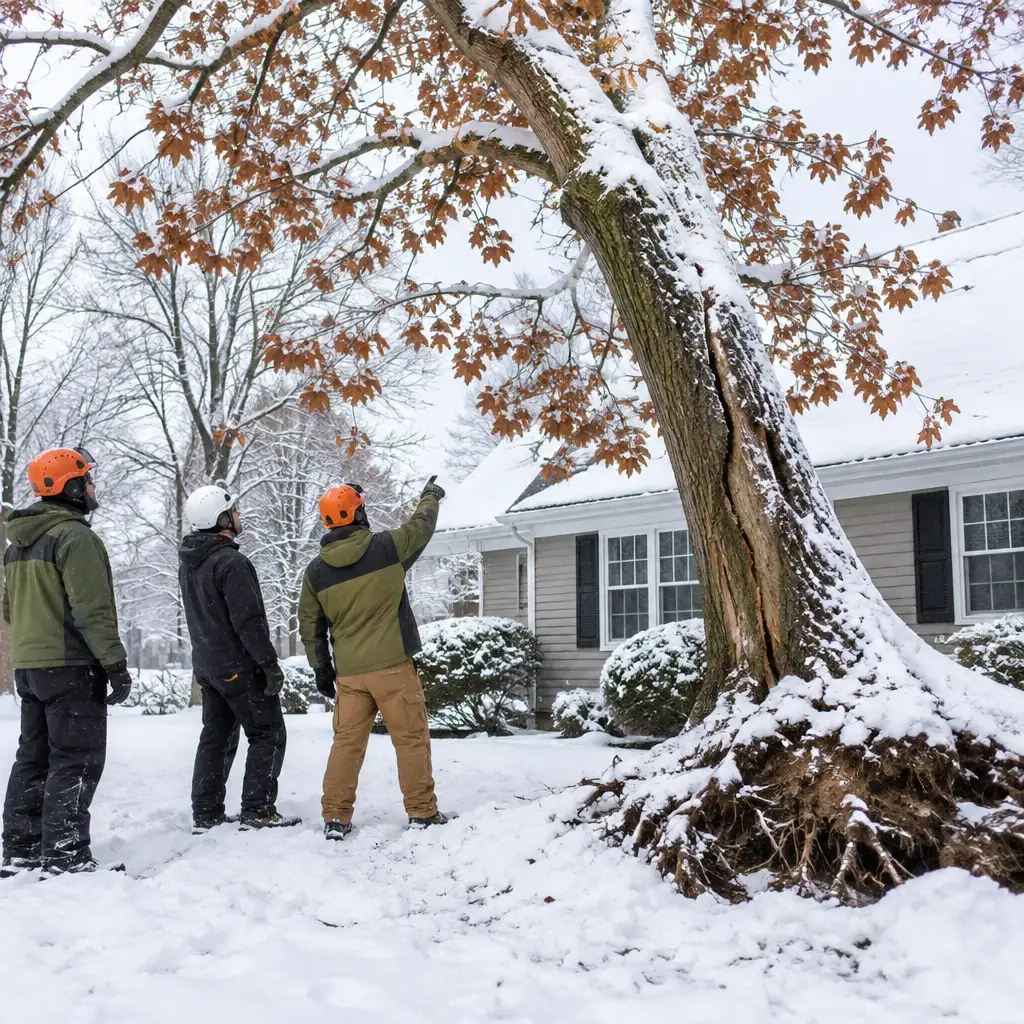
Heavy, wet snow can turn a healthy-looking tree into a hazard overnight. In Freetown, MA and nearby towns in Southeastern Massachusetts, homeowners often wake to sagging branches, split bark, or trees that have shifted toward houses and driveways. Understanding the warning signs of instability helps you protect people, vehicles, and structures before a dangerous failure occurs.
This article explains clear, homeowner-friendly signs to watch for after a heavy snow event: leaning trunks, visible cracks, fungal decay, and root lift. It also covers safe interim steps you can take while waiting for professional help and explains when to request emergency hazardous tree removal from a licensed crew.
Norman Tree Service responds to winter storm damage across the region, including Freetown, Fall River, New Bedford, and surrounding towns. If a tree looks unstable after snow, quick, informed action—combined with professional emergency response—can prevent property damage and injury.
Leaning and shifted trunk after heavy snow
A sudden lean after snow is one of the most visible signs that a tree may need hazardous tree removal. Snow and ice add weight to branches and can change a tree’s center of gravity. If a trunk that was previously straight now tilts noticeably toward a structure, driveway, or power line, the tree’s root plate or lower trunk may be compromised.
Look for new or increased lean compared with surrounding trees and property features. Small, gradual leans that developed over years are different from a rapid shift after a storm; rapid tilting indicates recent structural failure and higher risk. If the lean changes overnight or with each thaw and freeze cycle, the tree’s stability is unstable and professional evaluation is warranted.
Because a leaning tree may fall unpredictably, keep people and vehicles away from the downhill side and consider contacting a local hazardous tree removal expert. For information on professional tree removal options, see our hazardous tree removal and tree removal services page.
Cracks, splits, and fractured bark to watch for
Heavy snow can worsen existing weaknesses. Deep vertical cracks in the trunk, splits where a major limb joins the trunk, or areas of missing bark are serious warning signs. Cracks can indicate internal fractures that reduce a tree’s ability to bear weight and resist wind or further snow loads.
Pay close attention to cracks that expose honeycombed or soft wood beneath the bark—this often signals structural compromise. A split limb that hangs on by a few strands of bark can suddenly release, sending large sections of wood onto roofs, vehicles, or people below. If you notice fresh splits or widening fissures after snow, treat the tree as potentially hazardous until a professional confirms otherwise.
Never attempt to climb the tree or remove large split sections yourself. Those actions can trigger a collapse. Contact experienced professionals who carry proper safety gear and rigging equipment to manage the hazard safely.
Fungal decay, cavities, and visible rot
Fungal growth, conks (mushroom-like fruiting bodies), or large cavities are signs that a tree’s internal structure has weakened from decay. Heavy snow increases stress on decayed areas and can lead to sudden failure. If you see shelf fungi or soft, spongy wood when you probe around the base of a trunk, the supporting wood may be compromised.
Cavities that are large enough to fit a hand into or extensive rot at the base of the tree often indicate advanced decay. These problems frequently develop over months or years, but the added weight of snow frequently exposes them as immediate hazards. Because decay reduces the tree’s load-bearing capacity, these trees are prime candidates for hazardous tree removal after a storm.
When decay is present near homes or utility lines, rapid action is important. A professional crew will evaluate decay patterns, assess failure risk, and recommend emergency removal when needed to protect property and safety.
Root lift, heaving soil, and trees perched on roots
Snowmelt and saturated ground can weaken root stability. Signs to watch include lifted root plates, soil cracks around the base, and roots that appear exposed or torn. A tree that is “perched” on its root mass—no longer firmly anchored in the soil—is at high risk of toppling, especially when winds pick up as snow melts.
Root injury or decay can leave a tree standing but unstable; the root system may no longer support the trunk and canopy. Trees near foundations, driveways, or septic systems are especially dangerous because failure can cause significant property damage. If you notice soil movement around the root zone or newly exposed roots after heavy snow, treat the area with caution and call for a professional assessment.
Norman Tree Service crews are trained to recognize root failures and can recommend emergency stabilization or removal based on site conditions, nearby structures, and public safety concerns.
Safe interim steps homeowners should take
While waiting for professional help, take practical precautions to reduce risk. First, create a safety perimeter: keep children and pets away, move vehicles out of the hazard zone, and clear walkways. Avoid under-canopy activities like shoveling or storing items beneath the affected tree.
Do not attempt to remove large limbs, cut the trunk, or climb the tree yourself. Snow and ice make cutting unpredictable and dangerous; inexperienced chainsaw work near compromised branches is a common cause of injury. If smaller branches are lightly loaded and accessible without entering the danger zone, use a long pole to gently dislodge snow—never stand under hanging limbs while doing so.
Document the damage with photos and notes about the tree’s lean, cracks, or fungal growth. This documentation helps emergency crews prioritize work and can be useful for insurance purposes. When you’re ready to request help, see our emergency tree services page for details on urgent response options.
When to request emergency hazardous tree removal from a professional crew
Request emergency hazardous tree removal when any of these conditions are present after heavy snow: the tree is leaning toward occupied buildings, there are fresh or widening trunk cracks, major limbs are split and hanging over homes or vehicles, there is visible root plate failure, or large fungal conks and cavities indicate advanced decay. If the tree is close to power lines, treat it as urgent and notify the utility company in addition to calling a licensed crew.
A qualified crew will assess the hazard and recommend one of three common responses: emergency removal, targeted limb reduction to reduce load, or monitored stabilization. Emergency hazardous tree removal is necessary when the immediate risk is high and there is a meaningful chance of collapse causing injury or property damage. Norman Tree Service is a licensed and insured Southeastern Massachusetts tree service with the experience and equipment to perform these removals safely.
When you call, provide location details, describe visible damage, and mention any structures or utilities at risk. If the situation poses immediate danger to people, call local emergency services first and then our team for coordinated response. To schedule evaluation or service, schedule a consultation through our contact page and let the crew know it’s an emergency situation so they can prioritize the response.
Frequently Asked Questions
Q: How fast should I act if I notice a tree leaning after snow?
A: If the lean is new and directed toward a house, driveway, or power line, act immediately—restrict access to the area and call a professional for emergency hazardous tree removal. Faster action reduces the chance of collapse and damage as snow melts or wind increases.
Q: Can I safely remove snow from branches to reduce risk?
A: For small, reachable limbs you can gently brush snow off using a long broom or pole while standing well clear of the trunk and directly under the canopy. Do not stand beneath heavy, cracked, or hanging limbs. For significant loads or damaged branches, contact a licensed crew to handle removal safely.
Q: What qualifications should I look for in a crew handling emergency hazardous tree removal?
A: Choose a licensed and insured tree service with experience in storm response and hazardous tree removal. Look for trained staff, appropriate safety gear, modern rigging equipment, and positive local references. A professional crew will assess risk, explain options, and work to protect your property during removal.
Storm damage and fallen trees can create dangerous situations that require immediate attention. Norman Tree Service provides emergency tree services throughout Southeastern Massachusetts and is prepared to respond when urgent tree-related issues arise.