
How to Decide Whether to Remove a Storm-Damaged Tree in Marion, MA: A Homeowner’s Guide
Summer storms in Marion can leave trees looking alarming: large limbs torn away, roots heaving, or entire trunks split. As a homeowner, your first priority after a storm is safety—protecting people, structures, and vehicles from further damage. Knowing when a tree can be stabilized and when it needs full tree removal is essential to making smart, cost-effective decisions during storm recovery.
This guide explains how to assess storm damage to trees in Marion, MA; outlines the signs that indicate hazardous conditions; and walks through the factors homeowners should weigh when deciding whether to remove a tree. We’ll also cover when to call for professional help, what to expect from licensed and insured crews, and how routine tree maintenance can reduce future storm risks.
Although the guidance here focuses on Marion and nearby coastal communities in Southeastern Massachusetts, the safety-first approach applies across the region. Summer is storm season—lightning, high winds, and occasional tropical systems can all create dangerous tree failures. Read on for practical, local advice to help you decide whether a storm-damaged tree should stay or be removed.
Quickly assess immediate safety hazards
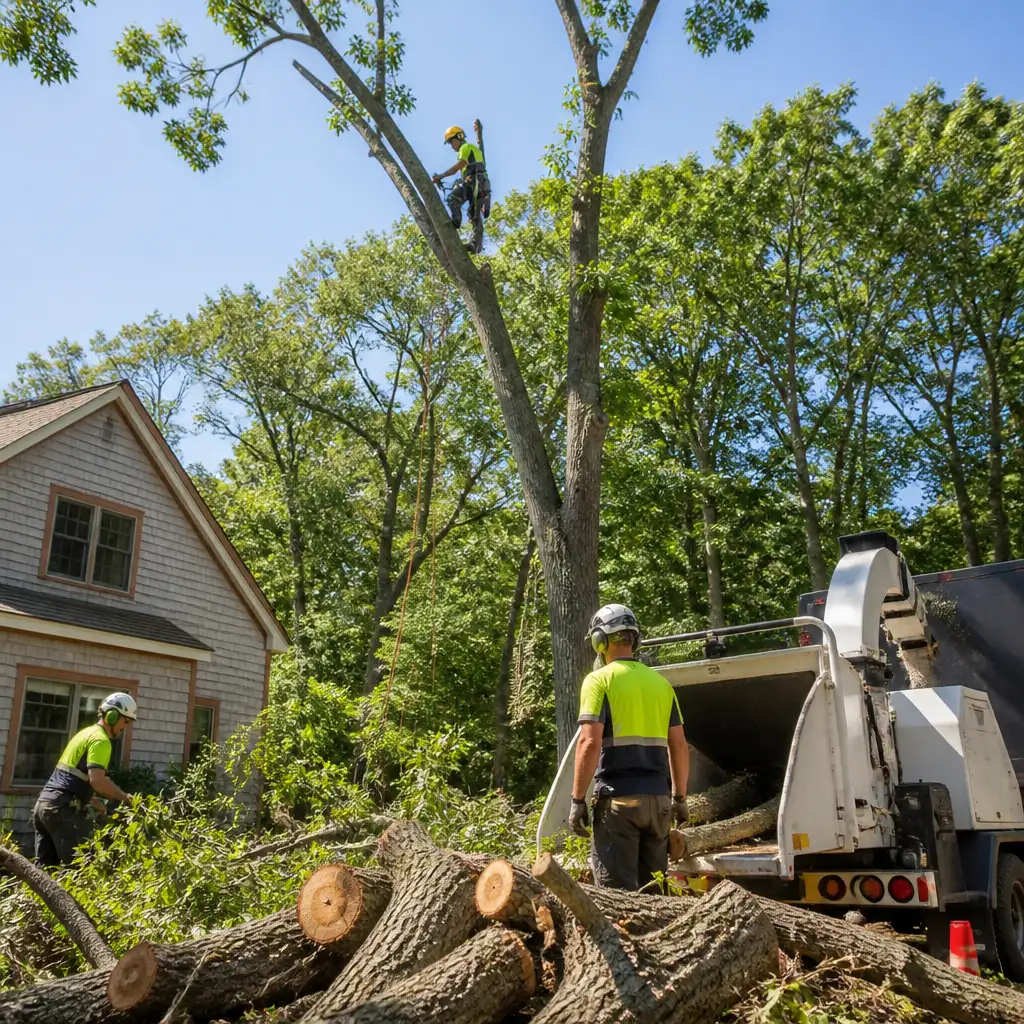
Right after a storm, do a quick visual sweep from a safe distance. Look for downed power lines caught in trees, large hanging branches (often called “widowmakers”), trees leaning against structures, or roots ripped from the soil. If any tree is touching utility lines or blocking access to your home, treat it as an urgent safety issue.
Never approach a tree that’s in contact with electrical wires. Contact your utility company first, and then consider emergency tree services if the tree creates a hazardous or obstructive situation. Safety is the top priority—keep family members and pets clear of unstable trees until a professional can evaluate the scene.
For hazards that don’t involve utilities—such as large broken limbs hanging over a roof or a tree leaning into a driveway—keep clear and tape off the area if possible. Photograph the damage for insurance purposes, but avoid climbing trees or attempting to remove large branches yourself. Improper removal can cause further collapse or injury.
Look for signs the tree can be saved
Not every damaged tree needs removal. Some trees sustain broken branches but retain a solid trunk and root system. Signs a tree might be saved include healthy new foliage in unaffected parts of the canopy, a stable root plate with no exposed roots or major soil movement, and limited damage confined to a few branches.
Proper pruning and targeted tree care can often restore structural balance and reduce future risk. Professional tree trimming services and selective pruning can remove damaged limbs, redistribute growth, and help a tree recover naturally after summer storms.
However, even when recovery seems possible, consider long-term health. If a tree has extensive branch loss, deep trunk cracks, or internal decay exposed by the storm, saving it may not be the best option. A licensed and insured evaluation will clarify whether pruning and monitoring are sufficient or if removal is the safer course.
Recognize when storm damage makes a tree hazardous
Certain signs indicate a tree has become hazardous and is a strong candidate for professional tree removal. Look for large splits or cracks in the main trunk, mushrooms or fungal growth near the base (a sign of internal decay), root plate upheaval, and a pronounced lean that developed after the storm. Broken tops or multiple large fractures typically suggest compromised structural integrity.
Also watch for signs of root failure, such as soil tearing away from the base, cracked pavement near the trunk, or tree lean combined with lifting soil. In coastal and wet soils typical of parts of Marion, root failures can occur more readily after saturated conditions. These situations increase the likelihood of a full fall and generally require removal by experienced crews.
When a tree threatens people or structures, it moves from a tree-care issue to a hazardous tree removal scenario. Norman Tree Service and similar professionals emphasize safety: they assess hazards, recommend removal when risk is unacceptable, and use rigging and staged removal techniques to protect property during the work.
Consider property and structural risks
Deciding on tree removal also involves weighing what’s at risk. A tree twenty feet from a shed poses a different threat than one leaning toward your home or perched above your roofline. Consider nearby utilities, driveways, pools, or mature landscaping features that could be affected if the tree fails.
If a damaged tree is partially supported by structures—such as leaning against a garage or fence—removal becomes more complex. Professional teams use careful planning and specialized equipment to reduce damage to buildings and landscapes. Hiring licensed and insured professionals protects you in case of accidental property impacts during removal.
In neighborhoods across Marion and nearby Southeastern Massachusetts communities, property proximity matters. Narrow lots or close-set houses make removal more difficult and often call for cranes, rigging, or sectional removal to safely lower large pieces away from structures. A reputable crew will explain the best approach and provide options tailored to your property.
Weigh cost, timing, and insurance factors
Cost is a common consideration after a storm. Tree removal prices vary with tree size, location, complexity, and whether emergency response is required. Ask for written estimates from licensed professionals that outline the scope of work, permits needed, and any potential additional charges. This transparency helps you compare options fairly.
Timing can affect both safety and insurance coverage. Some insurance policies require mitigation of hazards to avoid further damage; leaving a dangerous tree untreated could complicate claims if it later falls. Photograph the damage and contact your insurer early to document the situation. If a tree is an immediate threat, call an emergency crew first and notify your insurer afterward.
Remember to choose a licensed and insured tree service. This protects your property and limits liability. Norman Tree Service, for example, emphasizes licensed teams, modern equipment, and a 100% satisfaction guarantee, which provides homeowners peace of mind during stressful storm recoveries.
When to call emergency tree services
Call emergency tree services when a tree poses an immediate danger—resting on a house, blocking an access point, or tangled in power lines. Emergency teams are equipped to secure the scene, coordinate with utilities, and perform safe removals or temporary stabilizations until a full assessment can be completed.
Emergency response isn’t just about fast work; it’s about safe work. Professionals trained in emergency tree care follow strict safety protocols to protect people and property. If you need urgent help after a summer storm in Marion, reach out to local crews who offer 24/7 storm response and have experience with coastal weather patterns.
Even when a tree isn’t an immediate threat, if you have any doubt about structural stability or root failure, call for an evaluation. Early professional intervention can prevent catastrophic failure during subsequent storms and often avoids higher costs and more complex removals later on.
What to expect from a professional tree removal
A professional tree removal begins with a site assessment and clear communication about the recommended approach. Expect the crew to explain safety measures, the sequence of work, required equipment, and how they’ll protect nearby structures and landscaping. Reputable companies will provide a written estimate and discuss required permits if applicable.
During removal, crews use rigging, sectional dismantling, and specialized equipment to lower large branches and trunk sections safely. After the primary removal, crews will typically clean up debris and chip branches unless otherwise arranged. Ask about cleanup standards upfront so you know what to expect on completion.
Choosing a certified, licensed, and insured crew reduces liability and ensures work is performed to industry safety standards. Look for local experience—companies operating throughout Southeastern Massachusetts will be familiar with Marion’s soil conditions, storm patterns, and municipal requirements. If you want a second opinion or a formal evaluation, request references and inquire about the team’s training and safety record.
Frequently Asked Questions
Q: How quickly should I remove a storm-damaged tree that isn’t currently leaning or touching structures?
A: If the tree isn’t an immediate hazard, schedule an inspection within a few days. Some trees can be stabilized or pruned, while others will show delayed failure. A professional can recommend monitoring or removal based on structural signs and the upcoming weather forecast.
Q: Will my homeowner’s insurance cover tree removal after a summer storm in Marion?
A: Coverage varies by policy. Most insurers cover tree removal when storm damage causes a tree to fall on a covered structure or creates a safety hazard. Document the damage with photos, keep records of estimates, and contact your insurer promptly. Your tree service can also provide documentation for claims.
Q: Can pruning or tree trimming prevent storm damage in the future?
A: Yes. Regular tree trimming and pruning reduce wind resistance, remove weak limbs, and encourage a more resilient structure. Seasonal maintenance—especially before summer storm season—can lower the likelihood of catastrophic failures and may reduce the need for future removals.
Whether you’re dealing with a dead tree, a hazardous tree, or a tree growing too close to your home, Norman Tree Service has the experience and equipment to complete the job safely and efficiently. Contact us today for a professional assessment and estimate.