
When to Consider Removing a Large or Leaning Tree Near Your Home in New Bedford, MA: A Homeowner’s Guide
Introduction
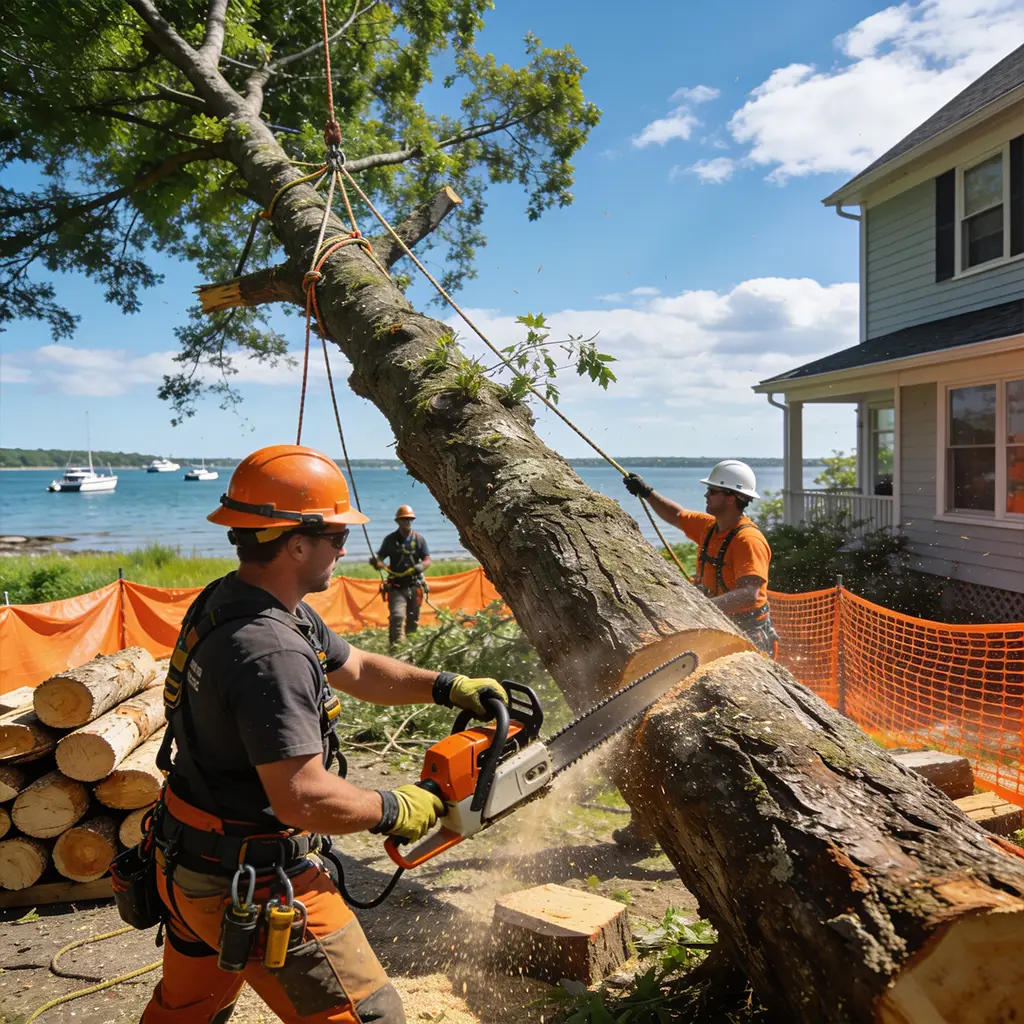
Large or leaning trees give character to properties across New Bedford, especially along waterfront lots and spacious suburban blocks. But those same trees can become hazards when they show signs of structural failure, decay, or when they’re too close to houses, outbuildings, or utility lines. As summer brings hurricane season and stronger storms, homeowners need clear guidance on when to act.
Understanding the difference between a tree that can be managed with pruning and one that may require full tree removal helps protect families, buildings, and valuable landscaping. This guide focuses on what to look for, how to assess risk for large or leaning trees on large lots or near the waterfront, and why hiring a licenced and insured crew matters in Southeastern Massachusetts.
We’ll emphasise seasonal preparation—especially for summer storms and hurricanes—and explain practical steps New Bedford homeowners can take to reduce risk, including when a pre-emptive removal is the safest choice.
How a large or leaning tree threatens homes and waterfront lots
Large trees store a lot of potential energy in their canopy and root systems. When those structures fail—due to decay, root damage, or external stress like storms—the results can be catastrophic for nearby homes, garages, decks, and boats stored on waterfront properties. Even a partial limb failure can puncture roofs, shatter windows, or sever power lines.
Leaning trees deserve special attention because the lean often signals an imbalance between the weight of the canopy and the holding capacity of the roots. A tree that leans toward a home or driveway presents a higher probability of falling in a high wind or saturated soil. In coastal New Bedford, salt spray, high water tables, and storm surge can worsen root health and stability over time.
Beyond direct impact damage, failing trees can create secondary hazards: blocked access routes, compromised utility services, and long-term landscape damage. For homeowners with large lots, the distance between trees and structures might create complacency—distance helps, but size and lean change the calculation rapidly. For waterfront owners, erosion and softer soils mean a formerly stable tree can become a hazard sooner than expected.
Signs a tree is structurally compromised
Recognising early warning signs gives you time to arrange a safe, planned removal rather than dealing with an emergency. Common indicators include extensive dead branches, large cavities in the trunk, fungal conks (mushrooms) at the base, visible root damage, and fresh or old cracks in major limbs or the trunk. These signs often indicate decay or internal weakness.
A pronounced lean, especially one that develops or increases over months, is a red flag. Pay attention to exposed roots, soil heave at the base, or a trunk that appears pulled away from the ground on one side. Seasonal behaviour can also reveal structural problems: a tree that drops more leaves than neighbours, or displays dieback in the upper crown, may be compromised.
Remember some risks are less visible. Internal decay can progress without obvious external signs. That’s why homeowners should consider a professional evaluation if a tree is large, leaning, or located close to a house. A trained team can spot subtle cues and suggest additional inspections or monitoring before recommending removal.
When to consider pre-storm or seasonal preventative tree removal
Summer in New Bedford brings a focus on storm and hurricane preparedness. Before a predicted storm season or after a particularly severe winter, review trees that could cause the most damage. Consider a pre-emptive removal if a large or leaning tree sits within fall distance of a home, garage, or frequently used driveway, or if it’s close to power lines and access routes.
Preventative removal is often the safest option when inspection reveals significant decay, multiple large split limbs, or root failure signs. Planned removals allow crews to use rigging and modern equipment to minimise property impact and remove hazards in a controlled way—much safer than emergency work after a storm when conditions and access may be poor.
Timing matters. When possible, schedule removals ahead of hurricane season and major summer storms. This reduces the likelihood that a compromised tree will fail under extreme weather. Homeowners on waterfront properties should especially prioritise pre-storm evaluations because changing shoreline conditions can accelerate root instability.
Assessing risk on large lots and waterfront properties
Large properties may host mature trees at varied distances from structures, and that complexity requires a methodical risk assessment. Map out the property to identify trees whose fall radius overlaps with buildings, driveways, sheds, or recreational spaces. Consider tree size, species, known disease susceptibility, and proximity to utilities when deciding priority.
Waterfront lots carry added factors: soil erosion, higher water tables, and salt exposure can all weaken root systems over time. Inspect shoreline trees annually and after major storms for signs of leaning, root exposure, or soil slumping. A tree that seems stable today can become hazardous after a season of erosion or following subsidence around its base.
For homeowners with boat houses, docks, or sheds near the shore, consider the value of a proactive approach. Removing a single dangerous tree in a planned manner is usually far less disruptive and costly than repairing flood-damaged or impact-damaged structures after a storm. For tailored advice, a licensed crew can evaluate risk across the whole lot and recommend targeted removals or maintenance.
What to expect from licensed and insured tree removal professionals
Choosing a licensed and insured tree service is crucial. Professionals bring experience, safety protocols, and equipment that reduce property impact and personal risk. A proper team will assess the tree, explain the reasons for recommending removal versus pruning or monitoring, and outline the removal plan including access, rigging, and debris handling.
During a site visit expect a discussion about options: selective limb reduction, bracing, or full removal. For trees that pose immediate danger, the crew will prioritise safety and may recommend emergency services. For planned tree removal, you should receive a clear estimate, scheduling details, and information about how the work will protect structures and landscaping.
Norman Tree Service and other local professionals use modern equipment and proven rigging techniques to remove large trees in confined residential spaces. Always verify insurance and licencing, and request references for similar jobs on large lots or waterfront properties in Southeastern Massachusetts to confirm experience and local knowledge.
After removal: protecting property and maintaining surrounding trees
Once a hazardous tree has been removed, there are practical steps to protect the property and maintain the remaining trees. Inspect the ground where roots were removed and consider erosion control measures on waterfront lots. Replanting choices should favour species suited to coastal conditions and local soil types to reduce long-term risk.
Remaining trees may need pruning or structural correction to balance the canopy after the removal of a neighbouring specimen. Regular tree trimming and tree pruning help reduce the chances of future failures by maintaining healthy branch structure and reducing wind sail. Schedule seasonal maintenance to catch developing issues early.
Finally, document the removal and any work performed. For insurance and resale purposes, keep records of assessments, the licenced removal contractor, and photographs before and after the job. If you need guidance on options or to request an estimate, reach out to a local team familiar with New Bedford conditions.
Frequently Asked Questions
Q: How close to a house does a tree need to be before removal is recommended?
A: There’s no single distance rule because tree size, lean, species, and root health matter. Generally, if a tree’s fall radius reaches a structure, or if a tree shows significant decay or lean toward a home, removal should be considered. A professional assessment will determine the safest option.
Q: Can a leaning tree be saved instead of removed?
A: Some leaning trees can be stabilised with cabling, bracing, or root and crown corrections, depending on the cause of the lean. However, if the lean stems from root failure or extensive internal decay, removal is often the safer long-term solution—particularly before hurricane season.
Q: How do I prioritise which trees to remove on a large or waterfront lot?
A: Prioritise trees based on immediate risk to structures, access points, utilities, and frequently used areas. Waterfront trees showing root exposure or soil slumping should be high priority. A staged plan from a licenced and insured crew can address the highest risks first while planning for longer-term maintenance of the rest of the property.
Whether you’re dealing with a dead tree, a hazardous tree, or a tree growing too close to your home, Norman Tree Service has the experience and equipment to complete the job safely and efficiently. Contact us today for a professional assessment and estimate.